
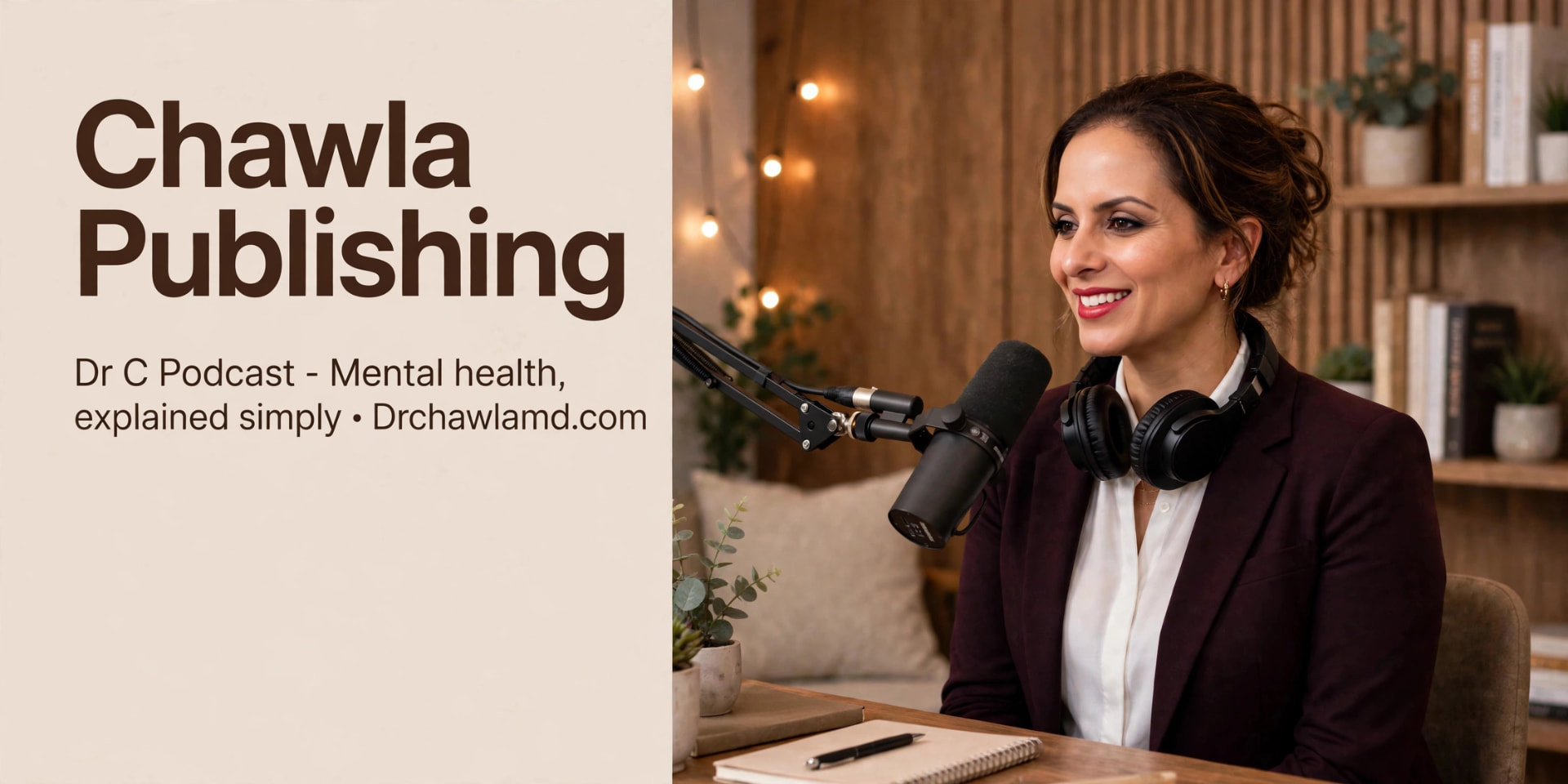
Shalini Chawla, MD
Board-Certified Adult Psychiatrist and Child and Adolescent Psychiatrist
Parenting doesn't come with a manual. Hard moments deserve a clearer next step.
Evidence-informed guides from Shalini Chawla, MD, a board-certified adult and child & adolescent psychiatrist. Understand concerns, prepare for conversations, and choose practical next steps for home, school, and care.
From guessing at 2 a.m. to knowing which storm you're in and what to say next.
Read the storm first. Then you'll know what to say.
When your child explodes, digs in or shuts down, it can look like the same storm. It usually isn't. Meltdowns, Anxious Refusal, ADHD Overwhelm, and Defiance come from different places underneath, and each one needs a different response from you. The Read-the-Storm Method is how I teach parents to tell the four storms apart in the moment. You name the storm, then you use the response built for it.
Get the free guide: Which Storm Is This?If you're at the end of your rope.
You're exhausted. You've lost your temper and felt terrible about it. Teachers give you looks, and family doesn't understand. Maybe you've wondered if you're failing your child. You aren't. You've been handed advice that doesn't fit what's happening underneath. You can start with one storm at a time.
For tired parents: The Burned-Out Parent →Start here
Three good places to begin
Read the storm first.
Meltdowns, anxious refusal, ADHD overwhelm and defiance each need a different response. These guides show you how to tell them apart.
Know what to say.
Word-for-word scripts for the hardest moments at home and at school.
Written by a psychiatrist.
Board-certified in adult and child & adolescent psychiatry, treating families since 2012.
A guide for every reader.
Parents, teens, adults and clinicians each get their own shelf.
Free resources
Free guides for parents.
Start with the printables I hand families on the way out the door. Enter your email once and every guide unlocks, at no cost.
You'll also receive Letters from the practice. Occasional notes only, unsubscribe anytime.
Free PDF · 8 pages
15 Minute Connection Kit
Repair the day in a quarter of an hour
A one-page routine you can actually keep: short, specific ways to reconnect with your child after school, after a meltdown, or after a hard week — no lectures, no screens, no extra hour you don't have.
Free PDF · 10 pages
Is This Normal or Should I Worry? Toolkit
A calm way to read the warning signs
The question that keeps parents awake, answered with clinical guardrails: what typical development looks like at each stage, the shifts that warrant a closer look, and exactly what to say when you call a pediatrician or school.
Free PDF · 3 pages
Which Storm Is This? Meltdown Guide
The free starter guide to the Read-the-Storm Method.
A quick guide to telling the four storms apart: Meltdowns, Anxious Refusal, ADHD Overwhelm, and Defiance, since the right response depends on what is happening underneath. Built on the Read-the-Storm Method.
Free PDF · 5 pages
What to Say in the Hard Moments: Free Sampler
One card for each storm
Clinician-written words for the hardest moments: the Read-the-Storm check, the safety card, and one script each for Meltdowns, Anxious Refusal, ADHD Overwhelm, and Defiance, plus a repair card for afterward.
Free PDF · 3 pages
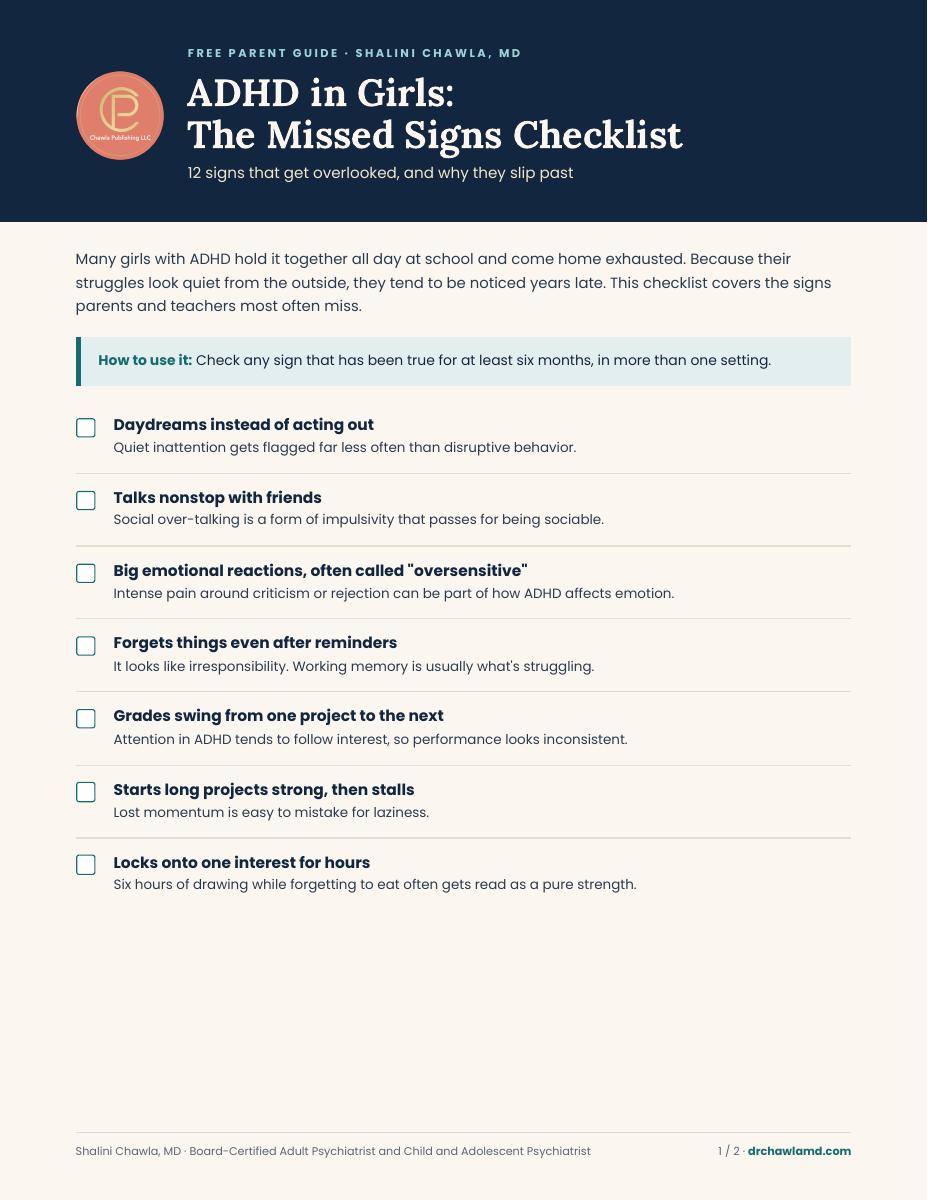
ADHD in Girls: The Missed Signs Checklist
Twelve signs that get overlooked
A checklist of the quieter ADHD signs parents and teachers most often miss in girls, and why they slip past.
Free PDF · 3 pages
The Quiet Signs of a Lonely Child
What loneliness looks like when kids don't say it
Lonely children rarely say so. This guide lists the mood changes, stomachaches, and behaviors that can point to loneliness.
Free PDF · 3 pages
Normal Worry or Something More?
Everyday anxiety or an anxiety disorder
A side-by-side guide to telling everyday anxiety from an anxiety disorder, based on whether the fear fits the situation and how much it limits your child.
Free PDF · 3 pages
Is Screen Time the Problem? Family Check
A ten-minute check for your family
A short check on what screens are doing to your child's sleep, mood, and family life, which often matters more than total hours.
Free PDF · 13 pages
50 Practical Facts About ADHD
With a small action to try after each one
A friendly, evidence-informed guide for parents, teens, and adults covering school, routines, executive functioning, treatment, and everyday strategies.
Free PDF · 2 pages
Family Holiday Priorities
Make room for everyone's voice
A worksheet for comparing each family member's holiday priorities and choosing activities to keep, simplify, or skip.
Free PDF · 4 pages
Helping Your Child Learn to Swallow Pills
A gentle practice guide
A step-by-step practice guide with safety precautions, supportive phrases, and advice on when to ask your child's care team for help.

A note from Dr. Chawla
“The families I've sat with taught me that healing rarely arrives in a single conversation. So I wrote these books to be the conversation that continues at home — patient, honest, and unafraid of the hard parts.”
— Shalini Chawla, MD
Who it's for
Resources for every stage of life.
Written
Parents & Caregivers
Plain-language guides for the questions that keep you up at night.
- Is this normal, or should I worry?
- Scripts for meltdowns and hard conversations
- School accommodations and advocacy
Written
Teens & Young Adults
Written directly to you — honest, warm, and never talking down.
- Strengths-based workbooks
- Social media vs. reality decoders
- What to do when hard things happen
Written
Adults
Calm, practical guides for understanding your own mental health.
- Understanding and managing adult ADHD
- Recognizing ADHD in women
- Healing from trauma carried through families
Written
Clinicians & Providers
Point-of-care frameworks you can use inside a fifteen-minute visit.
- Screening and stratification tools
- Disclosure and counseling language
- Documentation and coding templates
Good to know